
Pesticides, bisphenols, and heavy metals are everywhere. Learn how certain beneficial bacteria can block their entry into the body.
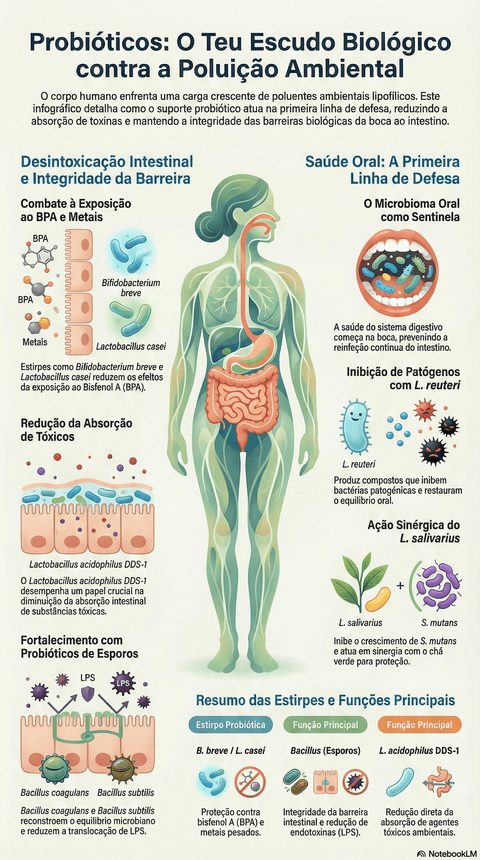
Without realizing it, our gut is bombarded daily with environmental toxins — from bisphenol A (BPA) in plastic containers to heavy metals present in food and air. When these compounds alter the balance of the microbiota (dysbiosis), the intestinal wall becomes permeable and bacterial endotoxins (LPS) pass into the bloodstream, fueling silent and chronic inflammation.
Science, however, points to a surprisingly effective line of defense: the right probiotics, in the right dose.
"Probiotics don't just aid digestion. They act as biological filters — trapping pollutants, strengthening the intestinal barrier, and modulating the immune response."
The right strain for every threat.
Not all probiotics are created equal. The choice of strain determines where and how the protection works.
Studies in animal models have shown that these strains increase fecal excretion of BPA by more than 2.4 times, reducing its intestinal absorption and its disruptive effects on the body. ( study )
Its cell wall has carboxylate and phosphate groups that bind to metals such as cadmium, forming complexes that are eliminated in the feces. It further reinforces the tight junctions of the epithelium, reducing intestinal permeability. ( Study )
These spore probiotics modulate the TLR4/NF-κB inflammatory pathway and protect junction proteins (claudin-1, occludin), significantly reducing the passage of LPS into the bloodstream in preclinical models. ( study )
Protection begins in the mouth. These strains reduce oral pathogens such as Streptococcus mutans and increase secretory IgA, interrupting the oral-intestinal reinfection cycle before harmful microorganisms reach the digestive tract. ( Study )
What does this mean in practice?
Environmental pollution is, to a large extent, unavoidable. What we can control is the resilience of our gut in the face of this exposure. Selecting probiotics with scientific evidence—and with the appropriate strains for each challenge—is one of the most concrete and accessible strategies to support the body's natural detoxification.
Notice: Data on Bacillus spp. and LPS reduction are solid in animal models; research in humans is ongoing. Always consult a healthcare professional before starting any supplementation protocol.

Comments (0)
There are no comments for this article. Be the first one to leave a message!