
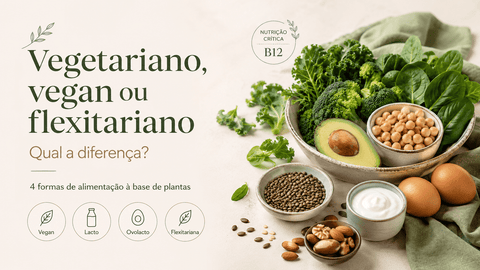
Vegetarian, vegan, or flexitarian — what's the difference?
Plant-based eating has gained remarkable popularity in recent years. But not all diets are the same — and understanding the differences can make all the difference in nutritional balance and long-term well-being.
Eating more vegetables is trendy. Eating well is the challenge.
Reducing meat and fish consumption has ceased to be merely an ethical choice and has also become a public health decision. Cardiovascular and metabolic benefits are well-documented, but the success of any plant-based diet depends on one thing: planning.
Knowing how to distinguish a vegan diet from an ovolactovegetarian one, or understanding exactly what a flexitarian regimen is, is the first step towards informed choices — and avoiding silent deficiencies that only appear after months or years.
Four approaches, four paths
Each regimen has its own rules regarding what it includes and excludes. Knowing them helps to understand which one fits best into each lifestyle — and where more attention is needed.
Vegan Diet
Excludes all animal products: meat, fish, crustaceans, eggs, dairy, and honey. It is the most restrictive approach and requires the most careful nutritional planning.
Lactovegetarian
Excludes meat, fish, and eggs, but keeps dairy — milk, cheese, yogurt, butter. It is a way to preserve animal sources of calcium and vitamin B12.
Ovolactovegetarian
Includes dairy and eggs, removing only meat and fish. It is usually the most practical vegetarian regimen from a nutritional point of view, especially in terms of protein intake.
Flexitarian
Not too much, not too little. Combines a predominantly plant-based diet with occasional consumption of animal products. It is usually introduced in phases — starting with 2 days a week without animal products, progressing to 3 and then 5.
Five nutrients to watch
When removing animal products — an almost exclusive source of various micronutrients — some nutrients may become deficient: vitamin B12, vitamin D, iron, zinc, and omega-3 (EPA and DHA). Regular tests and professional monitoring are essential.
What can change with more plants on your plate
Various observational studies link predominantly plant-based eating patterns to improvements in several health markers — especially when maintained in the medium and long term, along with a balanced lifestyle.
Heart
Lower cardiovascular risk and better blood pressure control.
Cholesterol
Reduction of saturated fat and blood cholesterol.
Weight & Metabolism
Greater protection against obesity and type 2 diabetes.
Prevention
Lower incidence of certain types of cancer, such as colon and breast.
When food isn't enough, supplements help
A varied and well-planned diet remains the foundation. However, in diets with animal food restrictions, some nutrients are difficult to obtain in sufficient quantities from food alone — and where supplementation can be a useful complement, always with professional guidance.
Vitamin B12
The most critical nutrient in vegan and strict vegetarian diets. It is virtually absent from plant sources.
Vitamin B12 contributes to the normal functioning of the nervous system and energy metabolism. In regimens that exclude or reduce animal products, it is the first supplement to consider — especially for those who have followed a vegan diet for more than six months.
Vitamin D
Mainly produced by sun exposure and scarce in food. It is often low in Portugal, especially in winter.
Omega 3 (EPA & DHA)
EPA and DHA are mainly provided by fish and seafood. Alternatives from microalgae exist for vegan regimens.
Iron & Zinc
Have lower bioavailability in plant sources. Important for the immune system and oxygen transport.
Common questions about plant-based eating
Is it possible to have a balanced vegan diet?
Yes, provided it is well-planned. It requires attention to complete protein, B12, vitamin D, iron, zinc, omega 3, and calcium. Professional nutritional guidance is recommended.
Do I need to take B12 in a vegetarian diet?
In vegan diets, supplementation is almost always necessary. In ovolacto- or lactovegetarian diets, it depends on regular consumption of eggs and dairy — periodic tests help confirm.
What exactly is a flexitarian diet?
It is a predominantly plant-based regimen that maintains occasional consumption of animal products. It is usually a gradual transition: 2, then 3, then 5 days a week without animal products.
Can children and pregnant women follow these regimens?
They can, but only with dedicated medical and nutritional supervision. During these phases, the needs for B12, iron, omega 3, and protein are especially high.
There isn't one single right path. There is the path that makes sense for each person — and that can be maintained over time.
More than choosing a label, the goal is to build a varied, balanced, and sustainable eating pattern. Vegan, vegetarian, or flexitarian — what distinguishes a good choice is planning, awareness of possible gaps, and the willingness to adapt over time. Supplementation, when appropriate, is a supportive tool, never a substitute for real food.
Trusted supplementation for plant-based eating
A curated selection of premium supplements to support those following a vegetarian, vegan, or flexitarian diet.
- Methylated Vitamin B12 in bioavailable form
- Vitamin D and omega-3 for essential support
- Premium brands with demanding clinical standards

Comments (0)
There are no comments for this article. Be the first one to leave a message!