
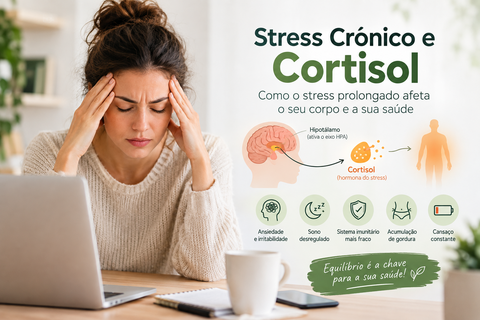
Chronic stress and cortisol: when the body doesn't switch off
Chronic stress and cortisol go hand in hand: when pressure is no longer sporadic but becomes your daily norm, the body keeps its alert system switched on. The results are felt in your sleep, your energy levels, and even the ease with which you catch the next cold. This guide explains what is happening and what helps you regain balance.
More than just "being stressed"
When we talk about stress, we almost always think about deadlines, traffic, or arguments. But to the body, stress is any demand that forces it to adapt: poorly slept nights, skipped meals, intense workouts without recovery, a lingering infection, or whole days spent indoors without natural light. The brain processes these signals through the same circuits, and the response is always the same: releasing alertness hormones.
The problem is not the stress itself, which is a useful and protective response. The problem is when the moment to switch off never arrives. That is when high cortisol at the end of the day, fatigue that doesn't go away with a night's sleep, and the feeling of always running on "half power" come into play.
In this article
- What cortisol is and how its daily rhythm works
- How prolonged stress reflects on energy, sleep, and immunity
- The four pillars to reduce stress load
- Where magnesium, B-complex vitamins, and vitamin D play a role, and where they don't
What chronic stress and cortisol do to the body
Cortisol is produced by the adrenal glands and follows a well-defined daily rhythm: it rises in the early hours of the morning to help you wake up and mobilize energy, and decreases throughout the day until it reaches low levels at night, allowing for rest and recovery.
Faced with a threat, the brain activates the hypothalamic-pituitary-adrenal (HPA) axis, which releases cortisol and adrenaline. In the short term, this response is valuable. When it persists for weeks or months, the rhythm becomes deregulated: cortisol may remain elevated when it should be dropping, or lose the morning rise that helps start the day.
Research links prolonged stress to changes in immune response, glucose metabolism, and sleep quality. This is why so many people in demanding phases notice they get sick more easily or take longer to recover.
And "adrenal fatigue"? The expression is popular, but it is not a recognized medical diagnosis; a systematic review found no evidence to support it. It makes more sense to talk about dysregulation of the stress response than "exhausted" glands.
When your stress response is overloaded
- Persistent fatigue, even after a full night's sleep
- Difficulty falling asleep or restless sleep
- Cravings for sugar, caffeine, or salty snacks in the mid-afternoon
- Irritability and lower tolerance for minor setbacks
- Brain fog and difficulty concentrating
- More frequent colds or slower recovery
- Less motivation and lower libido
How to lower the stress load, rather than just managing it
Breathing techniques and meditation help, but they work much better when you reduce what feeds stress at its source. These are the four points where small changes have the most impact on your cortisol rhythm.
Morning natural light
Light is the strongest signal to set your biological clock. Spending the day in closed spaces, with bright artificial light at night, confuses the rhythm of cortisol and melatonin.
Go outside for 10 to 20 minutes within the first hour of the day and dim the lights and screens at night.
Regular sleep
It is during sleep that the body performs much of its hormonal and immune recovery. Irregular schedules are, in themselves, a stress factor.
Go to bed and wake up at similar times, including on weekends.
Stable blood glucose
When blood sugar plummets, the body interprets it as a threat and releases cortisol. Skipping meals and living on coffee worsens the cycle.
Regular meals with quality protein, fiber, and fat; caffeine only until early afternoon.
Movement and boundaries
Moderate exercise, especially outdoors, helps to "burn off" the stress response. Conversely, intense training without rest adds to the total load.
Daily walks, training adjusted to your fatigue levels, and clear times to disconnect from work.
The minimum recommended sleep for adults
The American Academy of Sleep Medicine and the Sleep Research Society recommend at least seven hours of sleep per night on a regular basis. No supplement compensates for repeated short nights: sleep is the foundation upon which everything else works.
Watson et al., Journal of Clinical Sleep Medicine, 2015
How this appears in daily life
Prolonged stress rarely presents itself with a name. It appears as small complaints that accumulate. These are some common patterns and the first step for each.
"I sleep for eight hours and wake up tired."
It may indicate unrefreshing sleep or a dysregulated cortisol rhythm. Start with fixed schedules, morning light, and fewer screens at night. If it persists, talk to your doctor.
"At night, my brain won't shut off."
Create a 30 to 60-minute transition routine: dim light, no emails, something calm. Many people include magnesium here before sleep.
"During stressful phases, I catch everything going around."
Prioritize sleep, complete meals, and adequate levels of vitamin D, which contributes to the normal functioning of the immune system.
"At five in the afternoon, all I think about is sweets and coffee."
A typical sign of unstable blood glucose. A lunch with more protein and a mid-afternoon snack usually do more than another coffee.
"I train a lot and am always exhausted."
Training is also stress. Review volume and intensity, ensure rest days, and get an adequate intake of magnesium and B vitamins.
"Is it a lack of magnesium?"
Fatigue, cramps, and irritability are non-specific signs with many causes. It is worth reviewing your diet and, if necessary, confirming with a professional.
When to seek a healthcare professional
Fatigue and sleep disturbances can have many origins beyond stress. Before considering supplements, it is important to speak with a doctor if you experience:
Signs that justify a consultation
- Marked fatigue that lasts for several weeks and does not improve with rest
- Unexplained weight loss or gain
- Palpitations, shortness of breath, or dizziness
- Persistent changes in mood, appetite, or sleep
- Frequent infections or those that take a long time to resolve
Nutrients that support the body in stressful phases
Supplements are a complement. They do not replace a balanced diet, adequate sleep, regular physical activity, or professional guidance when necessary. What they can do is help ensure the intake of nutrients that the body uses more during demanding periods.
Magnesium, B-complex vitamins, and vitamin D are the most solid starting points. Adaptogens, such as ashwagandha, have interesting but still preliminary research.
Ecogenetics Magnesium Bisglycinate
Magnesium bisglycinate is a chelated form, bound to the amino acid glycine, and is generally well-tolerated digestively. This makes it one of the preferred forms for those looking for a daily magnesium supplement.
Why it may help
Magnesium contributes to the normal functioning of the nervous system, normal psychological function, and the reduction of tiredness and fatigue. A 2020 review describes a two-way relationship between stress and magnesium: stress increases losses, and low levels make the body more reactive.
How to use
Follow the dose indicated on the label. Many people prefer to take it at the end of the day, integrated into their nighttime routine.
Holos Nutrition B Complex Vitamin
Why it may help
It brings together all eight B vitamins, including coenzymatic forms such as P5P (B6) and methylcobalamin (B12). Vitamin B6 contributes to the regulation of hormonal activity; pantothenic acid (B5) contributes to the normal synthesis and metabolism of steroid hormones; both contribute to the reduction of tiredness and fatigue.
How to use
In the morning, with breakfast, at the dose indicated on the label. Also contains plant extracts, including ashwagandha.
Designs for Health Liposomal Vitamin D3
Why it may help
Vitamin D contributes to the normal functioning of the immune system. Those who spend most of the day indoors, especially in autumn and winter, have less sun exposure to produce it.
How to use
Liquid, with a meal containing fat, at the label dose. Ideally, with a prior check of vitamin D levels.
Zeinpharma Ashwagandha KSM-66
Why it may help
Ashwagandha has been used for centuries in Ayurvedic tradition as an adaptogen. In a trial with 64 adults over 60 days, the group that took root extract recorded lower serum cortisol values than the placebo. It is a small and short study: the evidence is promising but still preliminary.
How to use
One capsule per day, with water. Not indicated during pregnancy or breastfeeding; those taking medication should speak to their doctor first.
Food supplements should not be used as substitutes for a varied, balanced diet and a healthy lifestyle. In case of pregnancy, breastfeeding, illness, or taking medication, a healthcare professional should be consulted.
Common questions about stress, cortisol, and nutrients
What is the best magnesium for stressful phases?
Among the various types of magnesium, bisglycinate (also called magnesium glycinate) is one of the most chosen for daily use because it is a chelated form and generally well-tolerated. Citrate is another common option. More important than the form is taking it regularly and at the indicated dose.
When to take magnesium: morning or before bed?
It can be taken at any time, with or without food. Many people prefer magnesium before bed, as part of an end-of-day routine. It is not a sleeping pill; it works best in conjunction with good sleep habits.
Do vitamins B6 and B12 make a difference in fatigue?
Both contribute to the reduction of tiredness and fatigue and to normal psychological function. They make more sense when your diet is poor in these vitamins or when your needs increase. B12, in particular, deserves attention in those who follow a vegetarian or vegan diet.
What is the importance of vitamin D for immunity?
Vitamin D contributes to the normal functioning of the immune system. In Portugal, despite the sun, it is common to have low levels in winter or when spending the day indoors. A blood test helps to understand if it makes sense to supplement and at what dose.
The goal is not to eliminate stress, but to give the body back its ability to switch off.
Chronic stress and high cortisol are not resolved with a capsule or a weekend of rest. They are resolved, little by little, with a set of safety signals repeated every day: morning light, regular meals, protected hours of sleep, movement, and clear boundaries for work.
Nutrition serves as a support base. Ensuring sufficient magnesium, B-complex vitamins, and vitamin D is a sensible way to support the body during demanding phases, and adaptogens can be an option to consider with the right information and realistic expectations.
Comments (0)
There are no comments for this article. Be the first one to leave a message!