
Mitochondria: 8 ways to support cellular energy
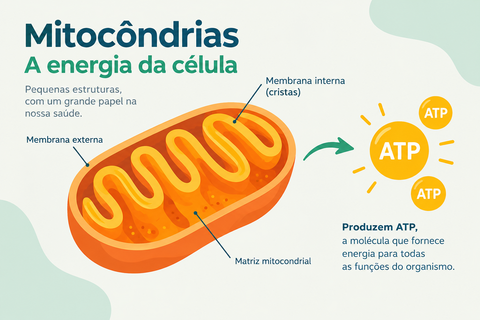
Mitochondria are the structures inside every cell that transform nutrients from food into usable energy. What you eat, how you sleep, and how much you move your body influence the environment in which they work—and there are simple actions, from your plate to your daily routine, that help provide them with what they need.
genes in mitochondrial DNA—its own genetic material, distinct from the cell nucleus, essential for mitochondrial function.
Source: MedlinePlus (NIH)enzymatic systems in which magnesium acts as a cofactor, including those involved in energy production.
Source: NIH Office of Dietary SupplementsWhat are mitochondria and why do they matter for energy
It is common to think of energy as a simple account: eat more carbohydrates to have more "fuel." But the body functions like a complete engine—it needs fuel, yes, but also oil, water, and regular maintenance.
It is in the mitochondria that this fuel is converted into ATP, the molecule that powers practically all of the body's reactions. For this process to run normally, macronutrients are not enough: micronutrients like magnesium, B-complex vitamins, and iron are necessary, as they contribute to normal energy-yielding metabolism.
The production of energy itself naturally generates reactive molecules—so-called oxidative stress. Pollution, alcohol, tobacco, and daily stress add to this load. Therefore, a diet rich in nutrients with antioxidant function, such as vitamin C, vitamin E, zinc, and selenium, which contribute to the protection of cells from unwanted oxidation, is part of any sensible strategy.
This guide brings together the essentials: the four pillars that sustain mitochondrial health, eight practical ways to apply them, and the—complementary—role of some food supplements.
The 4 pillars of cellular energy
Before any supplement, the foundation lies in habits. These four pillars summarize what mitochondria need to work in good conditions.
Colorful and antioxidant plate
Vegetables, fruits, herbs, and spices provide vitamin C, vitamin E, and other plant compounds.
In practice: include at least two different colors of vegetables in every main meal.
Quality protein
The amino acids in protein are the raw material for enzymes and protective molecules like glutathione, which the body produces itself.
In practice: a source of protein—fish, eggs, legumes, quality meat—at every meal.
Energy micronutrients
Magnesium, iron, and B-complex vitamins contribute to normal energy-yielding metabolism.
In practice: prioritize green leafy vegetables, nuts, seeds, legumes, and whole grains.
Less overload
Reducing excess sugar, alcohol, and tobacco, getting enough sleep, and moving your body regularly relieves the load on the cells.
In practice: start with one change at a time and maintain it for a few weeks.
Fruit and vegetables: the simplest and most forgotten recommendation
The World Health Organization recommends that adolescents and adults consume at least 400g of fruit and vegetables per day—about five portions. It is the most accessible way to ensure vitamins, minerals, and plant compounds with antioxidant function. The same entity recommends keeping free sugars below 10% of daily energy, which favors whole fruit over juices.
Source: WHO — Healthy diet8 practical ways to support mitochondria in daily life
Each of these ways addresses a common question about energy and nutrition. You don't need to adopt them all at once: the effect comes from consistency.
Reduce external aggressions
Pollution, tobacco, excess alcohol, and prolonged stress increase oxidative stress. Not everything is controllable, but every factor reduced counts—and a diet rich in vegetables helps balance the scales.
Ensure sufficient protein
Protein provides the amino acids from which the body builds enzymes and glutathione, a protective molecule produced by the cells themselves.
Know the "in-house" antioxidants
Coenzyme Q10 and alpha-lipoic acid are produced by the body and participate directly in energy reactions within the mitochondria. They are present in small amounts in meats, fish, and some vegetables.
Keep magnesium levels up
What is magnesium used for in energy? It contributes to normal energy-yielding metabolism and to the reduction of tiredness and fatigue. In phases of higher demand, it is worth looking closely at dietary sources.
Cover other key micronutrients
B-complex vitamins and iron contribute to normal energy-yielding metabolism; vitamin C, vitamin E, zinc, and selenium contribute to the protection of cells from unwanted oxidation.
Choose good fats
Fats are one of the main fuel sources for mitochondria. Oily fish provides omega-3 (EPA and DHA); olive oil and avocado complete a balanced fat profile.
Relieve daily load
More than "detox programs," what makes a difference is reducing what overloads the body: fewer ultra-processed foods and alcohol, more fiber for the gut, regular sleep, and physical activity—one of the best-known stimuli for mitochondrial renewal.
Be mindful of sugar—especially added sugar
It's not about cutting out fruit, but preferring it whole rather than as juice and avoiding products with added fructose or glucose syrups. Two to three pieces of fruit a day fit well into a balanced diet.
When tiredness requires professional attention
Persistent tiredness that does not improve with rest, shortness of breath, palpitations, unexplained weight loss, or marked sleep disturbances warrant a medical evaluation before any supplementation. Fatigue can have many causes that only a healthcare professional can assess.
Supplements for mitochondria: a complement, not a shortcut
Food supplements can help complete your diet in phases of higher demand or when the intake of certain nutrients is low. But they work on a foundation—and that foundation cannot be replaced.
Magnesium Bisglycinate
Thorne · 187 g powder
Why it can help
Magnesium contributes to normal energy-yielding metabolism, the reduction of tiredness and fatigue, and normal muscle function. Magnesium bisglycinate is a form bound to the amino acid glycine, generally well-tolerated digestively.
How to use
Dissolve the dose indicated on the label in water, preferably at the same time every day. Do not exceed the recommended daily intake. Those with kidney disease or taking regular medication should first confirm with a doctor or pharmacist.
B-Supreme
Designs for Health · 120 capsules
Why it can help
A B-complex with B vitamins in active forms. Vitamins B2, B6, and B12 contribute to normal energy-yielding metabolism and the reduction of tiredness and fatigue.
How to use
Take in the morning, with a meal, according to the label dose. Yellow urine color is normal and due to vitamin B2.
See B-Supreme →Coenzyme Q10 Ubiquinol
Zeinpharma · Kaneka™ 50 mg · 60 capsules
Why it might be of interest
Coenzyme Q10 is produced by the body and is part of the chain of reactions that generates energy in mitochondria. Ubiquinol is its reduced form. Evidence on supplementation in healthy people is still limited.
How to use
Take with a meal that contains fat, as it is fat-soluble. Those taking anticoagulants or other medication should talk to their doctor first.
See Coenzyme Q10 Ubiquinol →Alpha-Lipoic Acid 600 mg
Good N'Care · 60 capsules
Why it might be of interest
Alpha-lipoic acid is produced in small amounts in the mitochondria themselves, where it acts as a cofactor for energy-producing enzymes. Research on supplementation in healthy people is still preliminary.
How to use
Follow the label dose, usually away from meals. Those taking regular medication should first confirm with a doctor or pharmacist.
See Alpha-Lipoic Acid 600 mg →Common questions about cellular energy
What is magnesium used for in energy production?
Magnesium contributes to normal energy-yielding metabolism and the reduction of tiredness and fatigue. It is found in green leafy vegetables, legumes, nuts, seeds, and whole grains.
Which is the best magnesium: bisglycinate, citrate, or chloride?
There is no single "best." Magnesium bisglycinate is often chosen for good digestive tolerance; citrate and chloride are common alternatives. The choice depends on each person's tolerance and the intended dose.
What is alpha-lipoic acid 600 mg used for?
Alpha-lipoic acid participates in energy-producing enzymes in mitochondria, and the body produces it in small amounts. The 600 mg dose is common in supplements, but evidence in healthy people is still preliminary.
Does B-complex help with tiredness?
Several B vitamins—such as B2, B6, and B12—contribute to the reduction of tiredness and fatigue. They make sense especially when the diet is poor in these vitamins; persistent tiredness should be evaluated by a doctor.
Sources consulted
Energy cannot be bought in a capsule — it is built, meal by meal and night by night.
Supporting mitochondria is, at its core, about taking care of the basics with consistency: a varied and colorful plate, quality protein, healthy fats, the micronutrients involved in energy production, and habits that reduce cellular overload. Supplements may have a place, especially when diet is not enough to cover needs — but as a complement, chosen judiciously and, whenever necessary, with professional guidance.
Explore premium supplements
- Selected formulas
- Benchmark brands
- Clear information on each product

Comments (0)
There are no comments for this article. Be the first one to leave a message!